Loading...
Egypt is not just a destination—it is a journey through human civilization. From the Great Pyramids and the Nile to ancient temples, vibrant culture, and timeless deserts, Egypt offers histor
Egypt is a destination that goes beyond sightseeing. It is a place where ancient history surrounds you, where pyramids rise from deserts, temples line the Nile, and human civilisation reveals its deepest roots.
Egypt is famous because it represents the foundation of human civilisation. Long before modern cities existed, Egypt had advanced architecture, writing systems, medical knowledge, astronomy, and spiritual beliefs that shaped the world.
The country is home to some of the most iconic landmarks ever created by humans. The Great Pyramids, the Sphinx, the temples of Luxor, and the tombs of the Valley of the Kings are not just tourist attractions—they are global symbols of intelligence, ambition, and belief.
Flowing through deserts and cities alike, the Nile River—often called the lifeline of Egypt—connects ancient history with modern life. Add to this the warmth of Egyptian hospitality, vibrant markets, rich cuisine, and dramatic landscapes, and Egypt becomes unforgettable.
What makes Egypt truly special is authenticity. Nothing here is recreated. Everything is original. Everything is real.
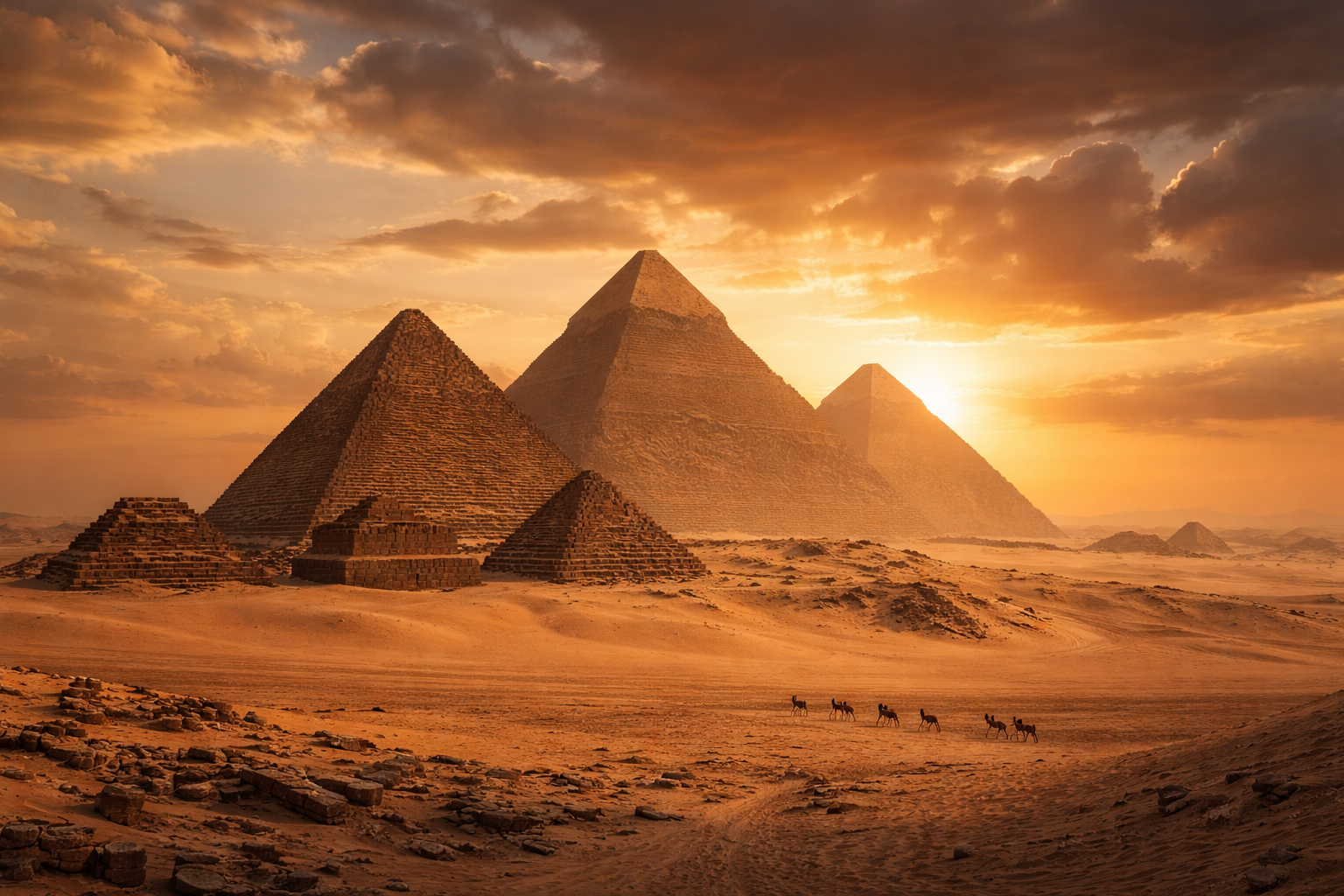
No journey to Egypt is complete without standing before the Great Pyramids of Giza. Built over 4,500 years ago, these structures continue to puzzle scientists, architects, and historians.
The Great Pyramid of Khufu, the only surviving wonder of the ancient world, stands as a testament to precision, engineering, and vision far ahead of its time.
Nearby, the Great Sphinx watches silently—half lion, half human—guarding the plateau with an expression that feels both calm and eternal.
Visiting the pyramids is not sightseeing. It is an emotional experience. You don’t just see history—you feel it.
Cairo is loud, chaotic, energetic, and deeply alive—and that is exactly its charm.
Here, ancient mosques stand beside modern buildings. Street food vendors serve recipes passed down through generations. Life moves fast, yet history is always present in the background.
Must-Experience Moments in Cairo
Exploring the Egyptian Museum
Walking through Khan El Khalili, filled with spices, lanterns, and art
Visiting historic mosques and Islamic architecture
Enjoying a peaceful Nile dinner cruise at night
Cairo may feel overwhelming at first, but once you settle in, it reveals its soul.
Often called the world’s largest open-air museum, Luxor holds an unmatched concentration of ancient monuments.
On the east bank of the Nile stand the magnificent Karnak Temple and Luxor Temple, showcasing towering columns and intricate carvings built for gods.
Across the river lies the Valley of the Kings, where pharaohs were buried in richly decorated tombs, including the resting place of Tutankhamun.
In Luxor, time slows down. History surrounds you from every direction.
A Nile cruise is one of the most calming and meaningful experiences in Egypt. As the boat glides gently along the river, villages, palm trees, and ancient temples appear effortlessly on the horizon.
Life along the Nile flows slowly, just as it has for centuries. Mornings feel timeless, sunsets glow gold, and nights are quiet and reflective.
A Nile cruise offers Egypt from a perspective that connects nature, culture, and history in perfect harmony.
Abu Simbel is one of Egypt’s most astonishing achievements. Carved into solid rock during the reign of Ramses II, these massive temples were later relocated stone by stone to save them from flooding caused by the Aswan Dam.
The scale, precision, and dedication behind this relocation remain one of the greatest preservation efforts in human history. Standing before Abu Simbel feels powerful, humbling, and unforgettable.
Egyptian culture is warm, expressive, and deeply rooted in family and community. Hospitality is not a gesture—it is a way of life.
Music, storytelling, art, and conversation are part of everyday life. Local markets are filled with laughter, bargaining, and color. Despite its ancient past, Egypt feels alive, human, and welcoming.
Egyptian food is hearty and comforting, made with simple ingredients and bold flavors.
Popular Egyptian Dishes
Koshari, the national favorite of rice, lentils, and pasta
Fresh falafel and flatbreads
Grilled meats and vegetable dishes
Traditional desserts soaked in honey and syrup
Meals are never rushed. They are meant to be shared.
Egypt is not only about history—it is also rich in natural beauty.
The vast Sahara Desert stretches endlessly in golden silence, while the Red Sea coastline offers crystal-clear waters, coral reefs, and vibrant marine life. Destinations like Sharm El Sheikh and Hurghada are ideal for relaxation, diving, and beach escapes.
Choosing the right season enhances your experience.
October to April: Best for sightseeing and exploration
Winter months: Ideal for Nile cruises
Summer: Hot, but perfect for Red Sea resorts
Egypt is welcoming to travellers. Tourist areas are well-managed, guides are knowledgeable, and hospitality is genuine.
Many visitors leave Egypt surprised—not by monuments, but by the warmth and kindness of its people.
Egypt changes how you see time, life, and human achievement. It reminds you how powerful imagination, belief, and determination can be.
You don’t return home with just photographs.
You return with perspective, wonder, and respect for humanity.
Egypt is for thinkers, explorers, dreamers, and anyone who wants to understand civilisation more deeply.
You don’t just visit Egypt.
You walk through the past.
You feel the present.
And you carry its memory forever.
If there is one destination that truly defines human history, mystery, and timeless beauty—Egypt is that place.
This guide explores why Egypt is famous, its legendary monuments, cities like Cairo and Luxor, cultural traditions, food, natural beauty, and why a journey to Egypt leaves a lasting impact on every traveler.
